
THERMOPAL floor renovation system
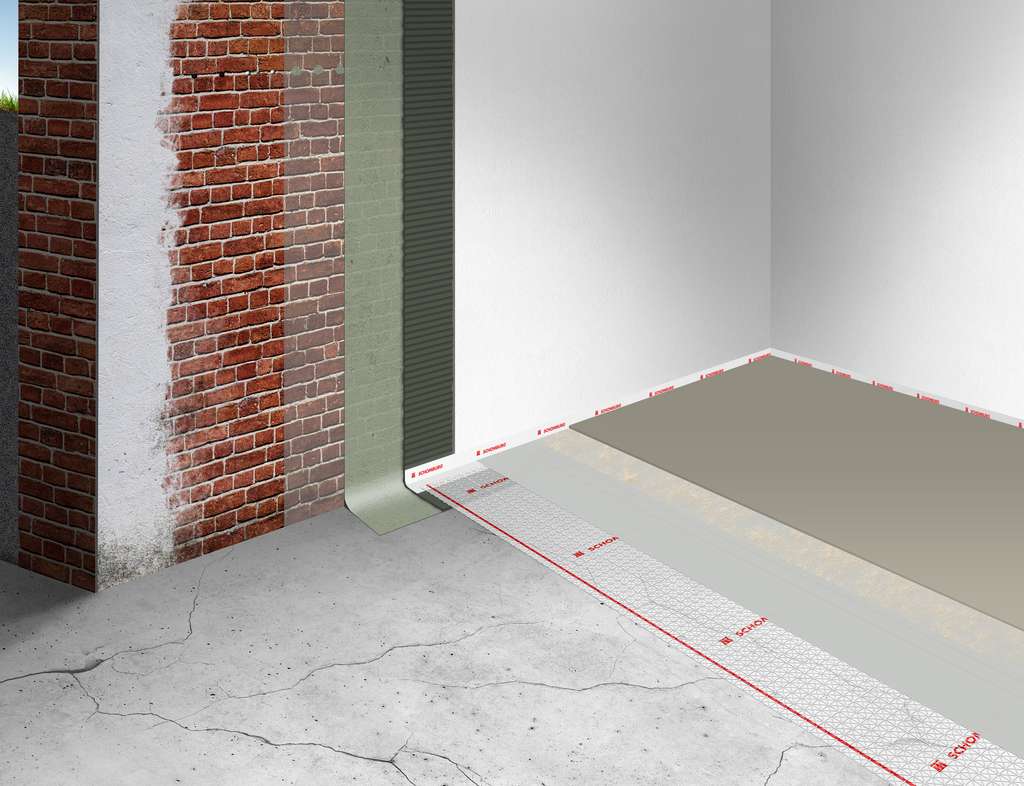
With the THERMOPAL floor renovation system, the laborious treatment of individual cracks can be omitted and the load bearing capacity of old floors can be re-established. It additionally contributes towards the stabilization of the substrate.
Areas of application
- Wearing surface in living areas
- Garages & workshops
- Industrial floors
- Interiors and exteriors
- For building component transitions
- For substrate preparation prior to subsequent wearing layers and floor finishes
System advantages
- Time saving renovation
- Low build-up depth
- Substrate stabilizing
- Waterproofs against penetrating moisture
- Crack-bridging
1 Substrate preperation
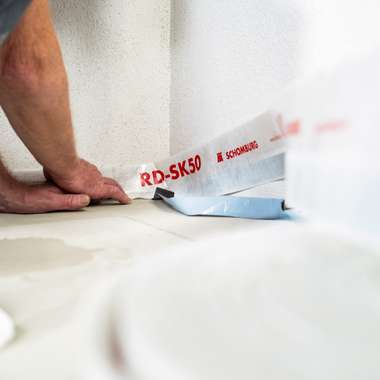
- Remove poorly bonded components via diamond grinding or shot blasting. Vacuum the substrate to produce a dust-free surface.
- Firstly place the self-adhesive insulating edging strip RD-SK50 at wall/floor junctions and at building components rising through the floor. Where the wall/floor junction is missing, firstly produce the waterproofing layer.
2 Rolling out and laying
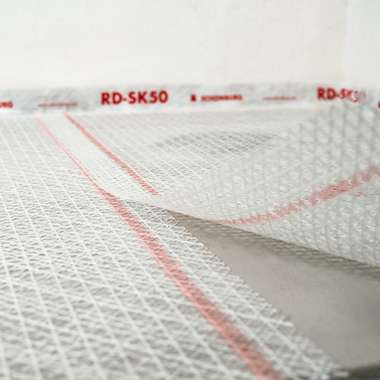
- Cut ASO-RSG to the required length. Lay the reinforcing membrane onto the prepared substrate with the printed side uppermost. Keep a distance of ca. 3 cm from building components rising through the floor.
- Overlap membrane edges by at least ca. 20 mm.
3 Coating and bedding in
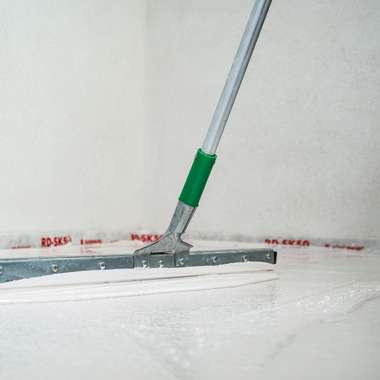
- Coat the area with ASODUR-SG3-thix. The coating can be evenly applied using a rubber squeegee and nylon roller. Subsequently back-roll the area and even out.
- Evenly broadcast the freshly applied coat of ASODUR-SG3-thix to excess with kiln dried 0.5 - 1.0 mm quartz sand.
4 Installation of the wearing layer
- Thoroughly remove the excess quartz sand after ca. 12 hours by sweeping and vacuuming. Subsequently overcoat the areas with the mineral-based industrial flooring ASOCRET-HFF.
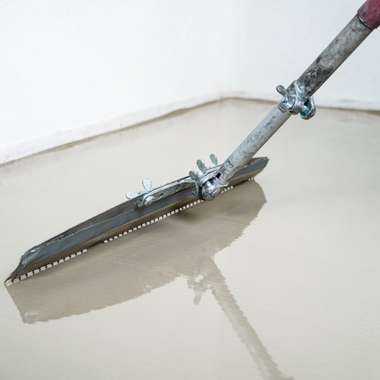
- Immediately after laying, de-aerate the fresh levelling compound with a spiked roller. For additional surface protection, we recommend overcoating the cured surface with ASODUR-V360W in the desired colour.